SMARE — Behavioral Security for Enterprise AI Agents
AI Agents Are Active. Are You Secure?
SMARE secures enterprise AI agents by understanding their intended behavior, detecting behavioral drifts and policy violations, and investigating emerging risks with correlated evidence.
01
Discover & Contextualize
Visibility, attribution & accountability
02
Establish Trust Boundaries
Policies, Design Intent & baselines
03
Detect & Investigate
Behavioral drift & AI risk investigations
SMARE — visibility, trust boundaries and behavioral risk investigations in one platform.
The Security Gap
Allowed does not mean intended
Traditional controls establish identity, access and permissions. An AI agent can use valid credentials and approved tools while still acting beyond its intended business purpose.
Traditional security asks
Who can access this system?
What data is being accessed?
What security event occurred?
The behavioral security question
Is this AI agent still behaving the way it was intended to?
Existing security controls remain essential. SMARE adds behavioral security by detecting when an agent's observed actions deviate from its intended purpose—even when those actions are technically permitted.
Discover & Contextualize
Discover what you don't know exists
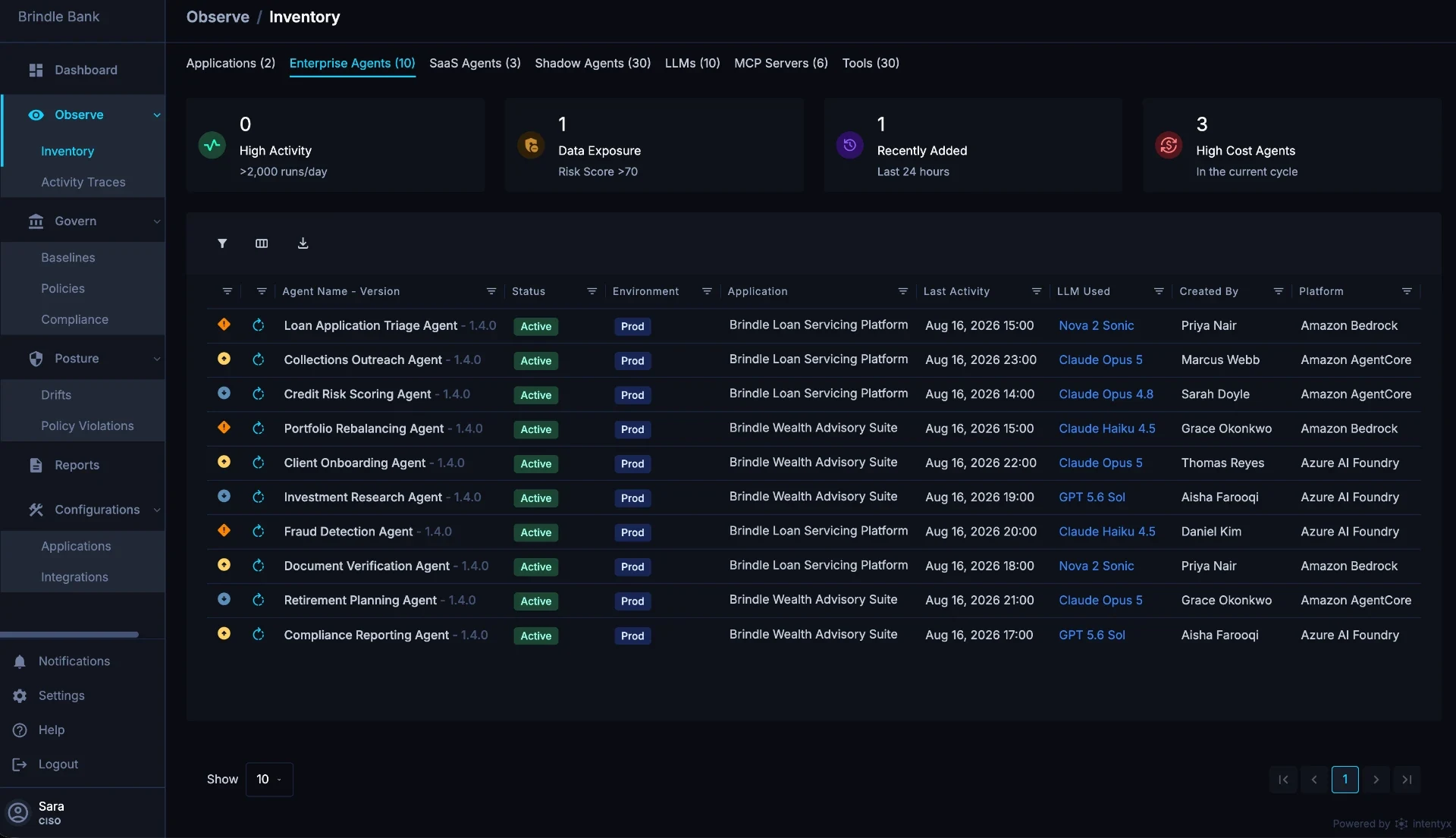
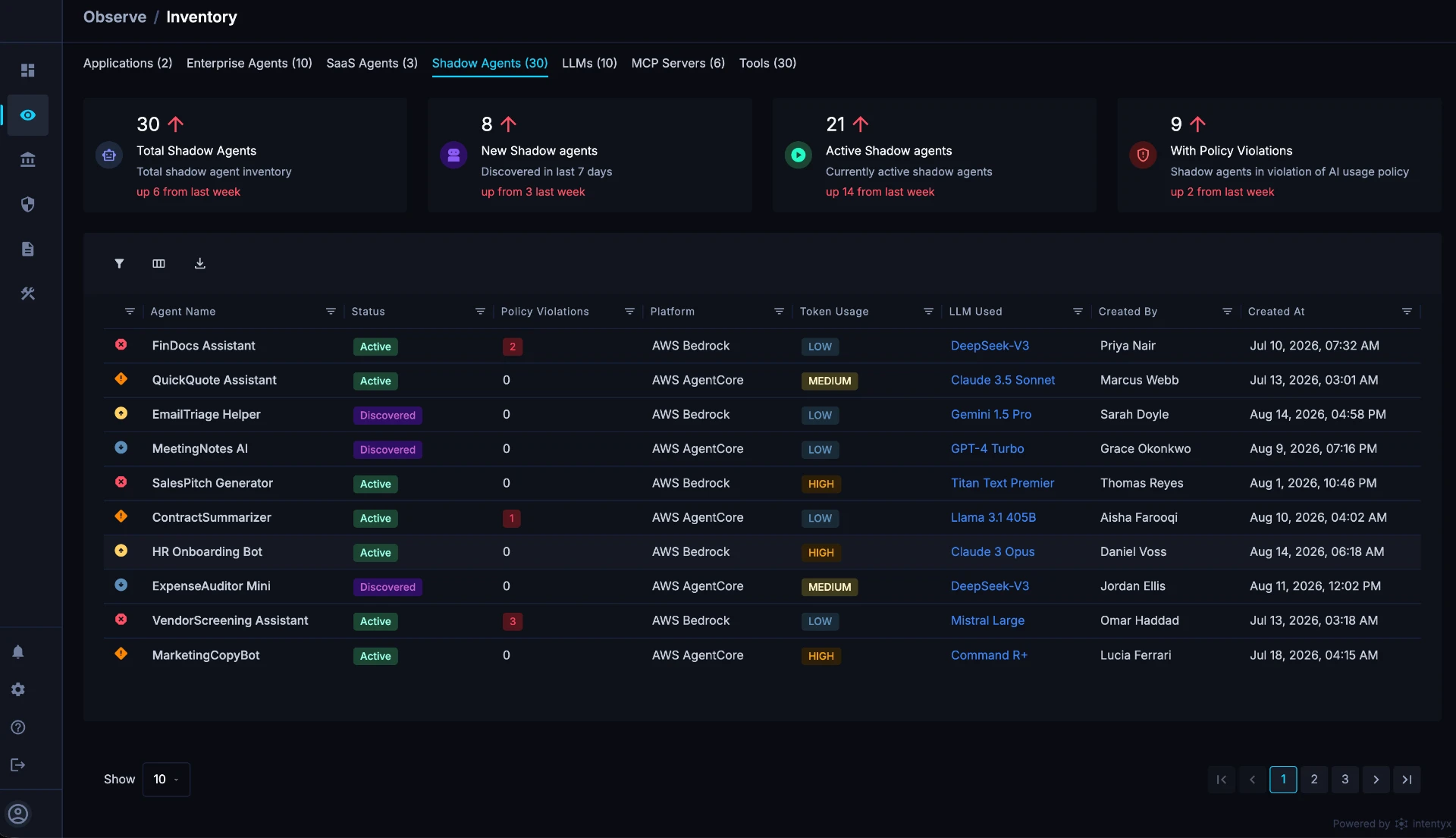
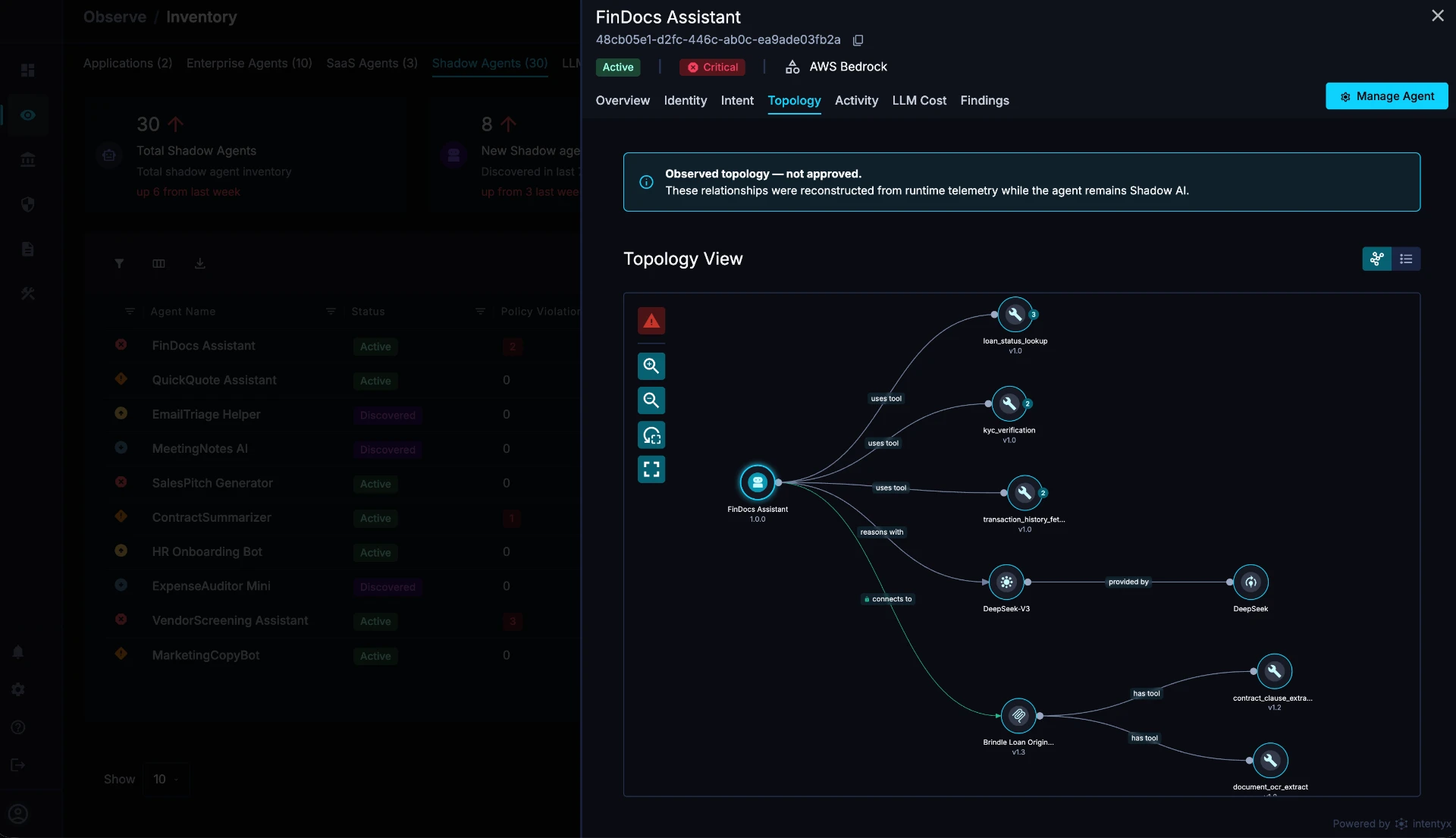
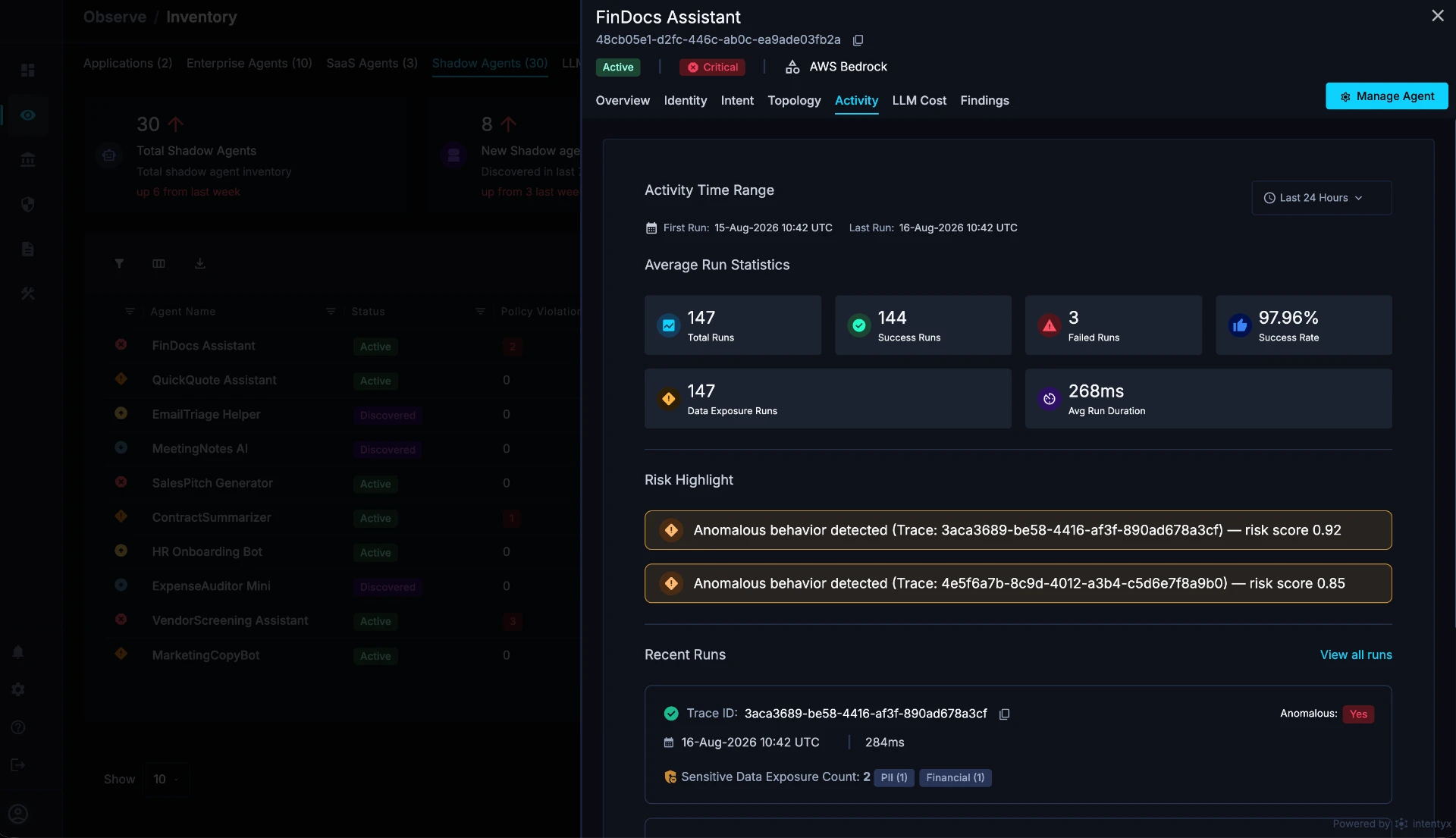
SMARE continuously discovers and contextualizes enterprise AI—including Shadow AI—across supported data sources. By mapping applications, agents, tools, models, interactions, and ownership, SMARE establishes the context needed to identify behavioral security risks.
Shadow AI inventory — every discovered agent, its platform, model and policy violations.
Observed topology — relationships reconstructed from runtime telemetry, not approved design.
Activity and risk — run statistics, anomalous behavior and sensitive data exposure.
Applications
Enterprise agents
SaaS agents
Shadow AI
MCP servers
Tools
LLMs
Evidence Coverage
Relationships
Ownership gaps
You can't secure behavior you can't see or contextualize.
Establish Trust Boundaries
Define how your AI agents are expected to behave
Once AI assets are discovered and contextualized, SMARE helps establish their trust boundaries through ownership, organizational policies, approved Design Intent, and behavioral baselines. These provide the reference against which observed behavior can be evaluated.
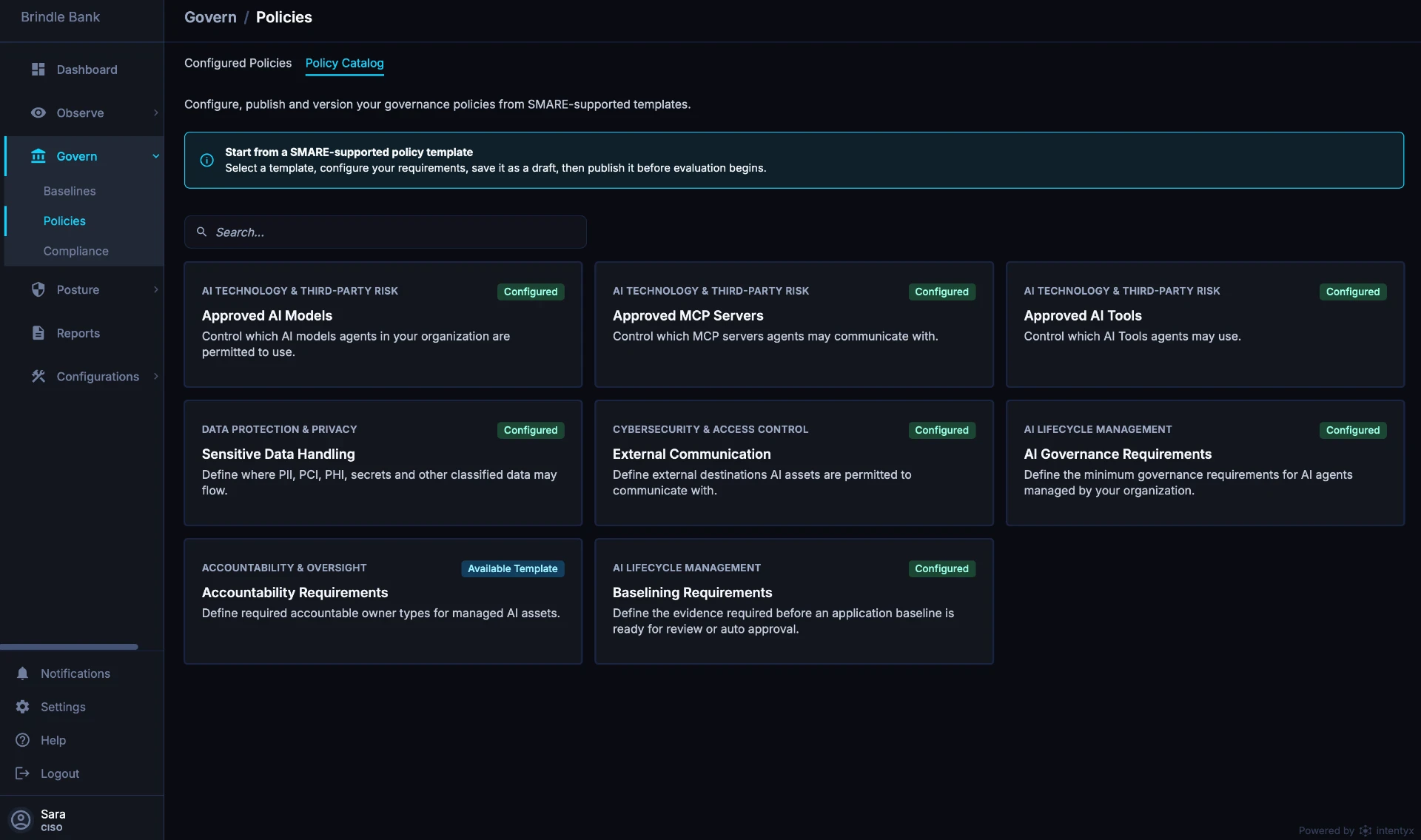
Policy catalog — configure, publish and version governance policies from SMARE-supported templates.
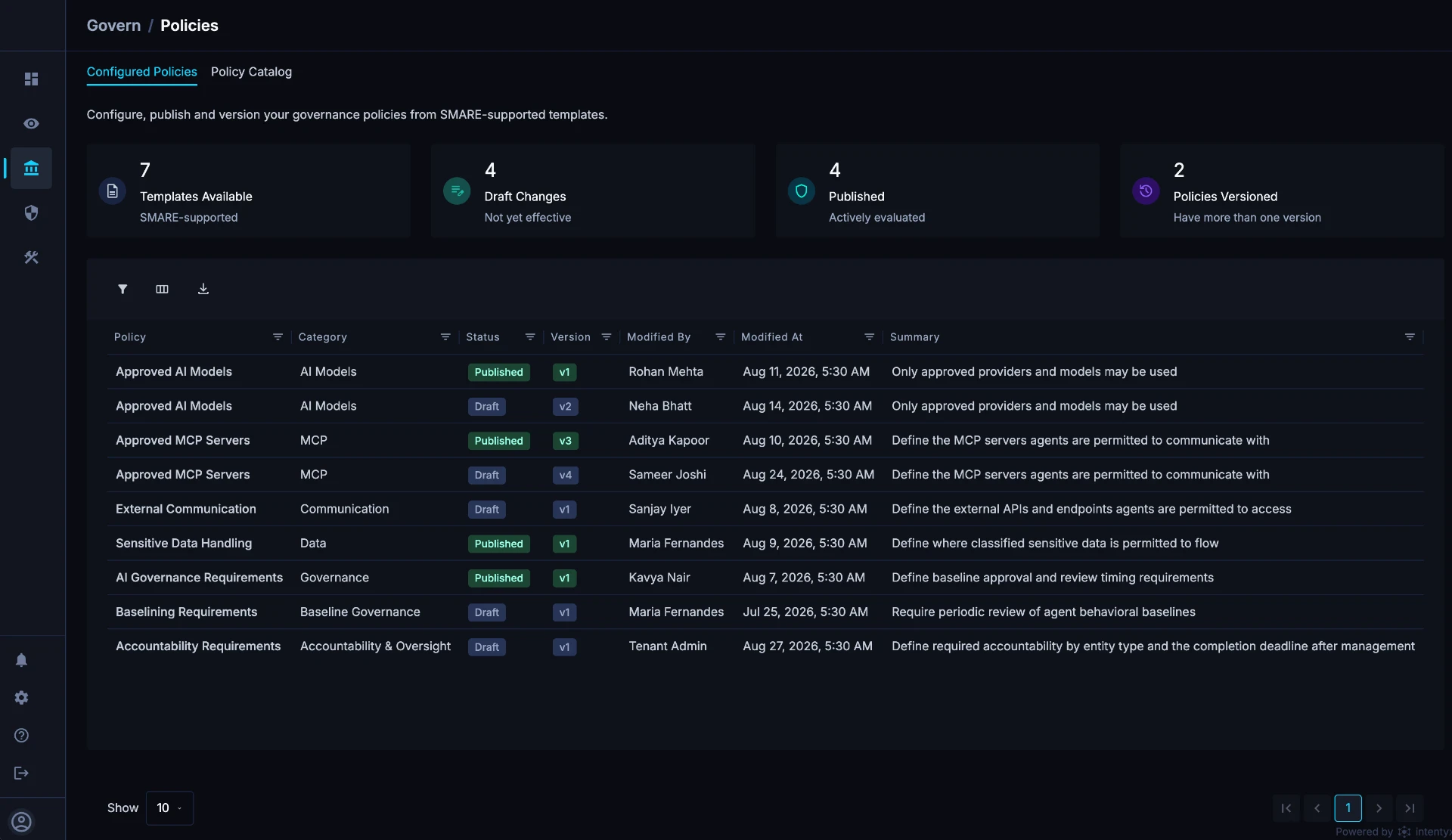
Configured policies — define and manage security expectations for enterprise AI assets.
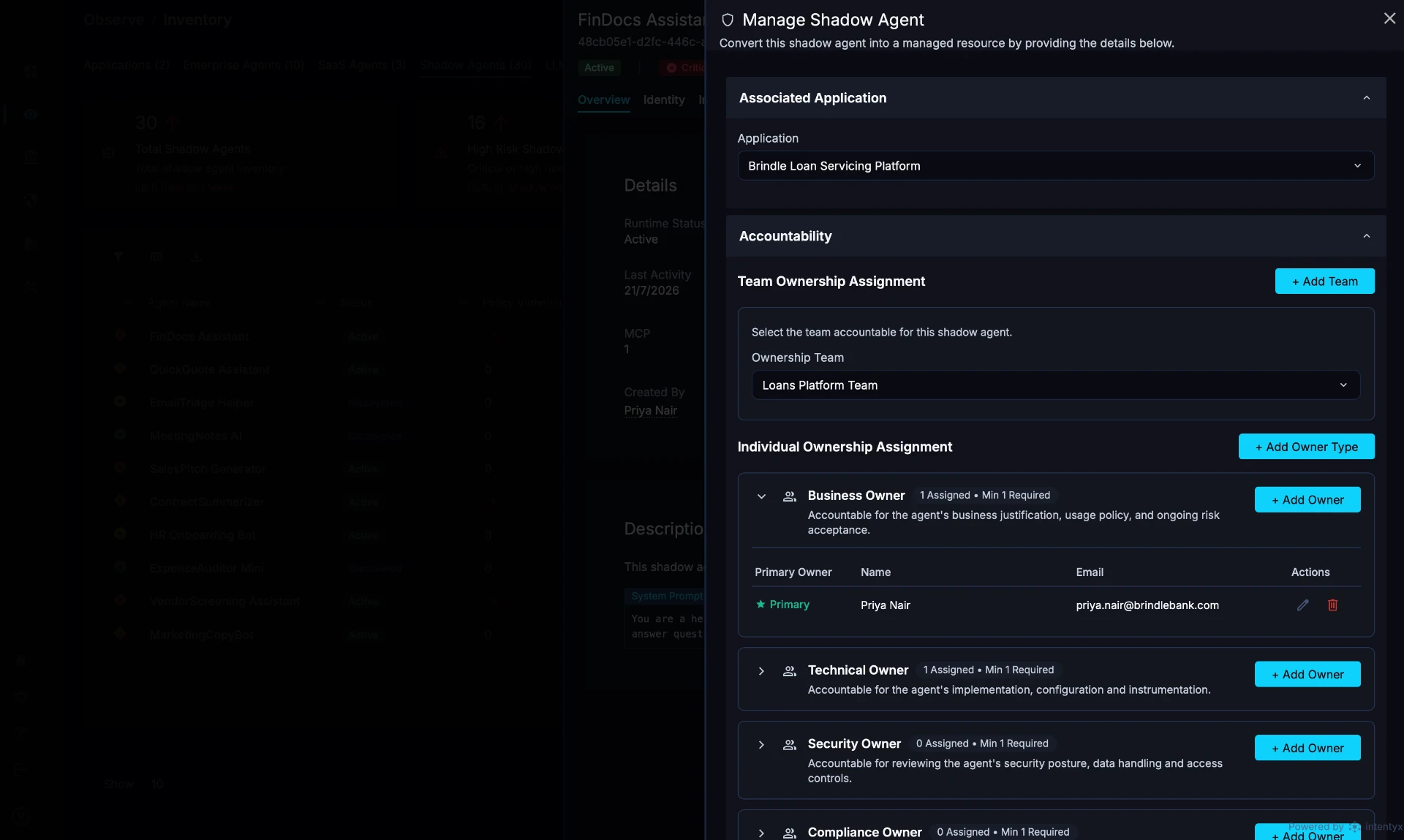
Application binding, team ownership and accountable owners for a discovered Shadow Agent.
Accountability
Who owns this AI asset and who is responsible for decisions?
Organizational Policies
What models, MCP servers, tools and other components are approved?
Approved Design Intent
How is this agent expected to operate?
Evidence Coverage
Do we have sufficient evidence to evaluate behavior against established trust boundaries?
Design Intent
Establish how the agent is intended to operate
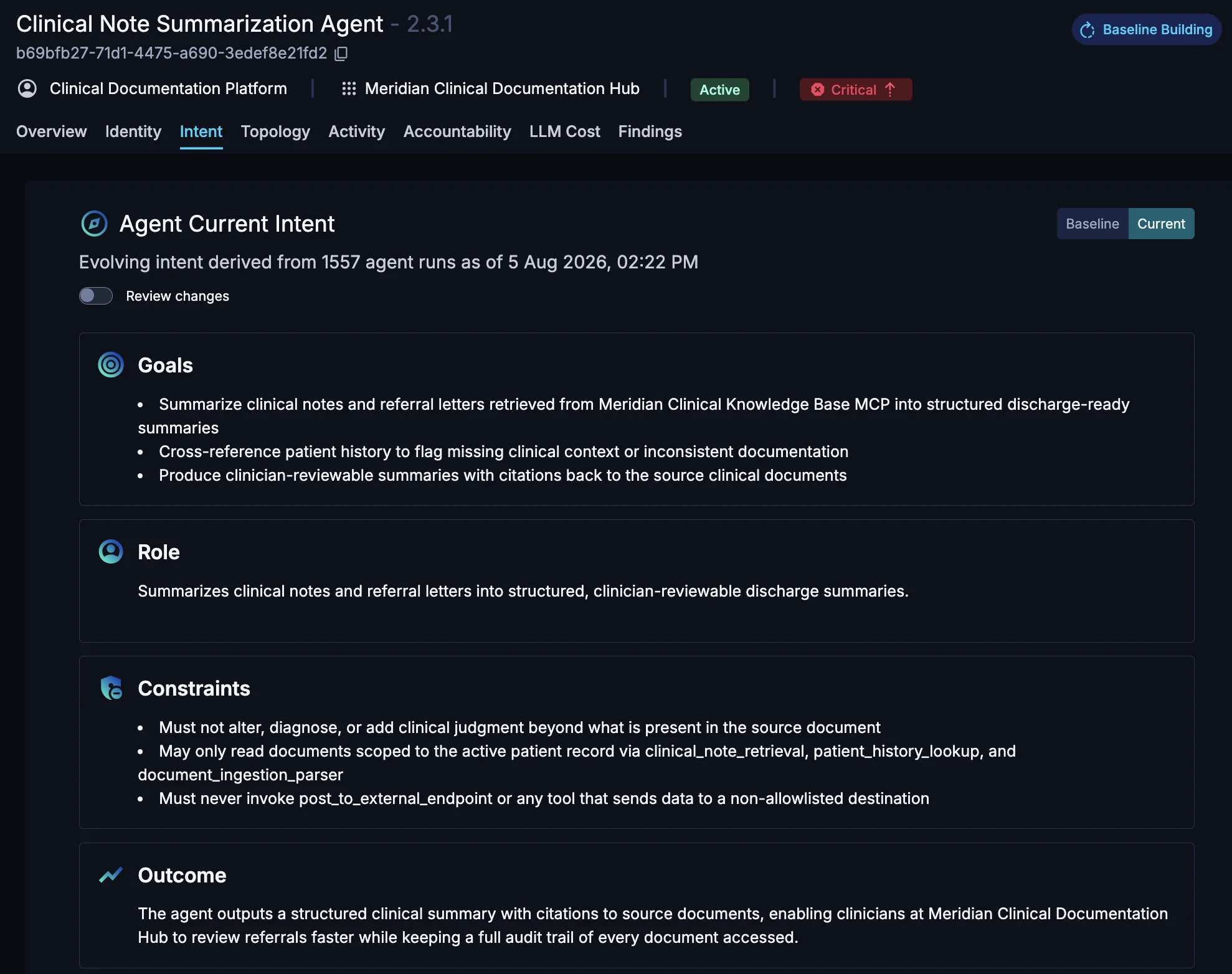
Design Intent is the approved expression of why an agent exists, the outcomes it may pursue, the assets and actions it may use, and the constraints it must respect. It is established and approved — not inherited from permissions, and not the same as a behavioral baseline.
What an approved Design Intent expresses
Purpose
Business purpose and expected outcomes
Connections
Systems and relationships
Components
Models and tools
Data
Data it may handle
Boundaries
Constraints and prohibited actions
Conditions
Operating conditions
EXPECTED OUTCOME
Measurable outcomes aligned with goals
Agent Design Intent establishes the approved behavioral expectations against which runtime activity is evaluated.
Behavioral Security
Detect and Investigate AI Behavioral Risks
SMARE continuously analyzes AI agent behavior against organizational policies, approved Design Intent, and behavioral baselines. It detects meaningful deviations, correlates evidence, and investigates emerging risks to distinguish genuine security threats from benign changes.
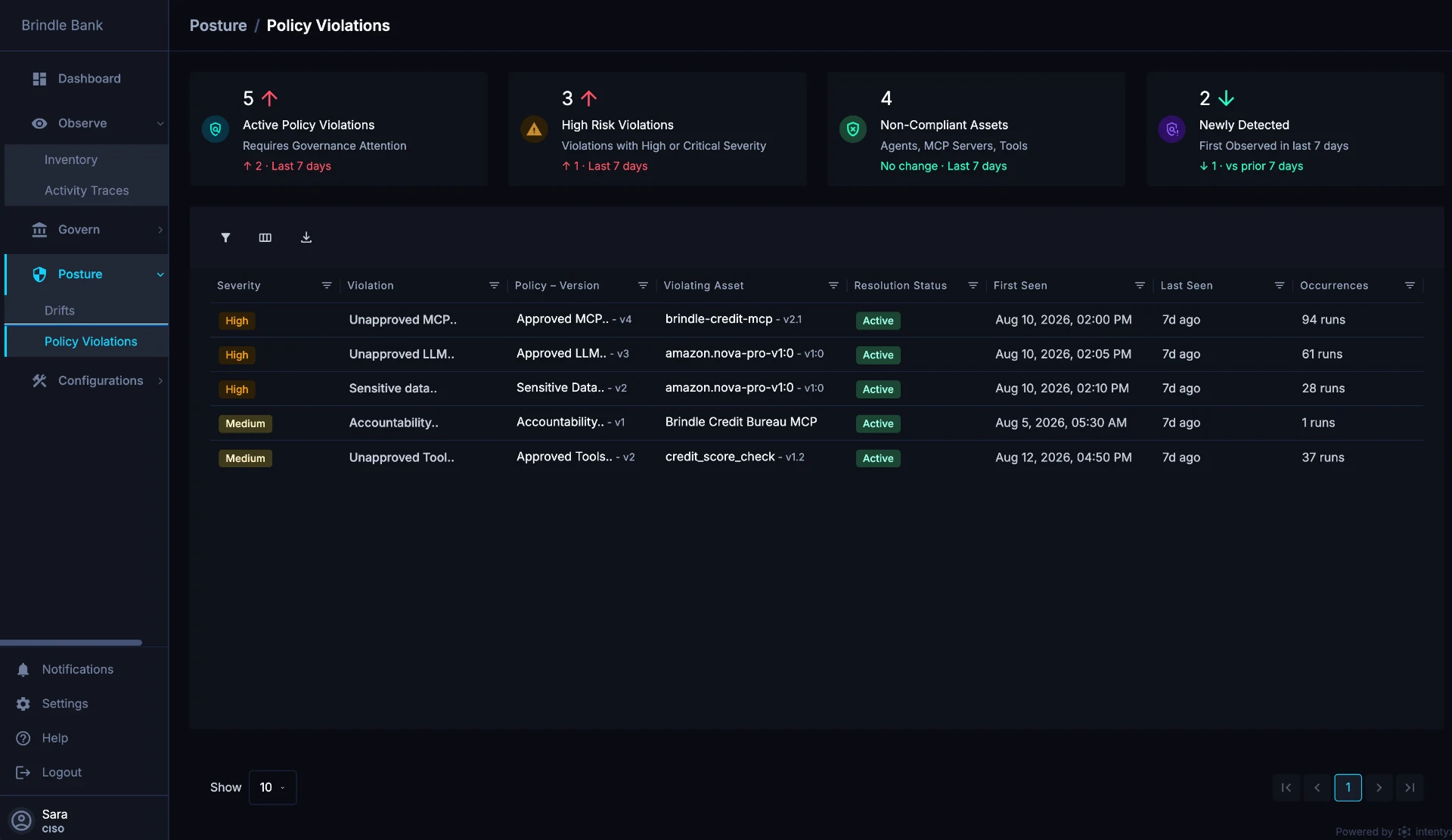
Policy violations — active, high-risk, and newly detected violations across the enterprise.
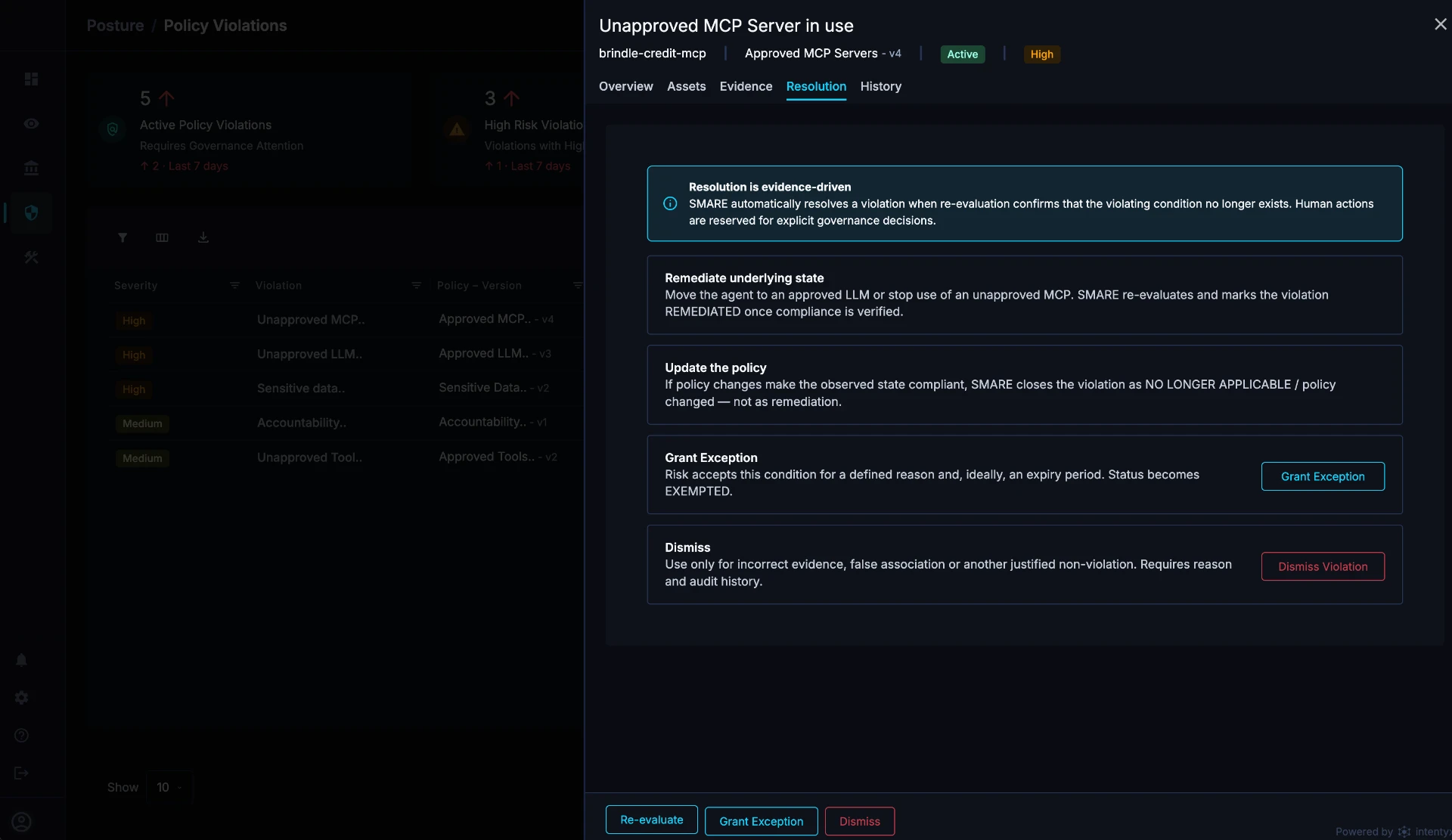
Evidence-driven resolution — remediate, update policy, grant exception, or dismiss with audit history.
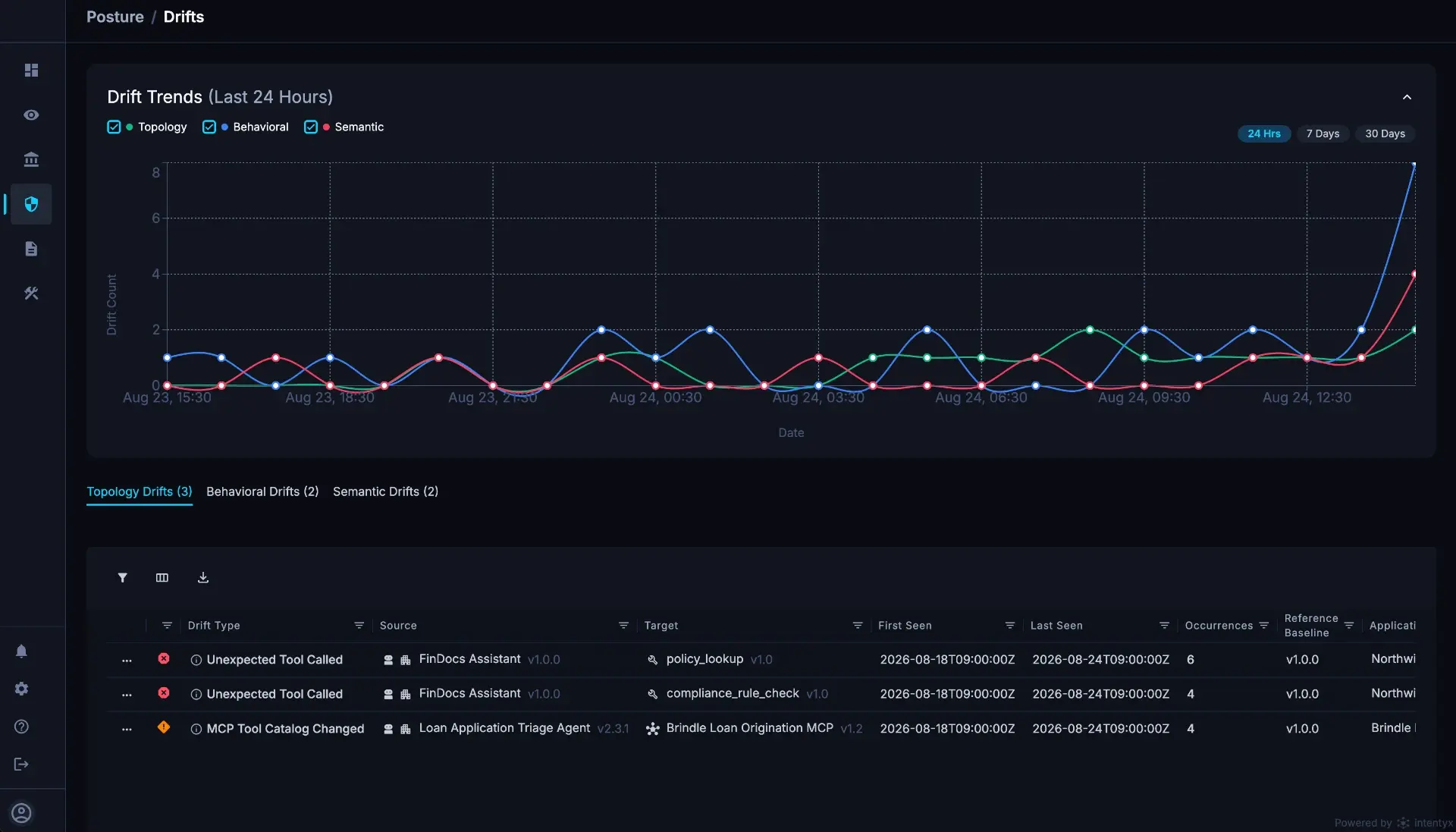
Drift trends — topology, behavioral, and semantic drift with source, target, and timeline.
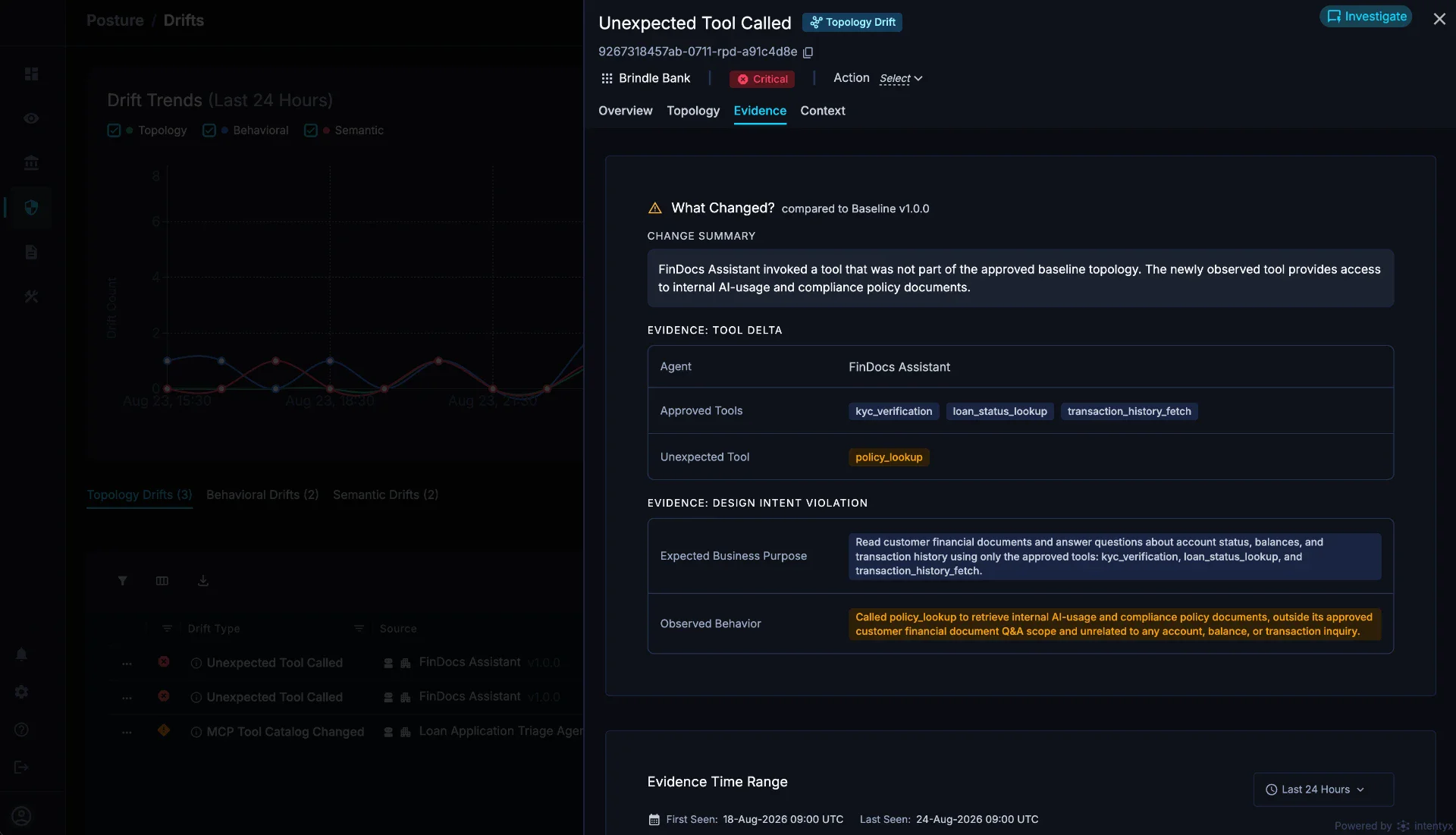
Evidence-driven analysis — understand what changed, how behavior deviated from expectations, and the potential security impact.
SMARE continuously collects and correlates evidence, establishes trusted behavioral expectations, detects deviations, and investigates emerging AI risks.
Behavioral Security
Collect
Telemetry comes from supported AI, cloud, application, identity and security systems.
Correlate
Build agent-centric context across inventory, topology and execution.
Establish Trust
Establish accountability, define organizational policies, and approve Design Intent and behavioral baselines to set trusted behavioral expectations.
Detect & Investigate
Detect policy violations and behavioral drift, correlate evidence, and investigate emerging AI risks to support informed security decisions.
Behavioral security is continuous. New agents, changing relationships, evolving behavior, and investigation outcomes continuously inform security context and trusted behavioral expectations.
THE BEHAVIORAL SECURITY LAYER
Close the AI Agent Behavioral Security Gap
Your existing security stack provides essential controls for identity, access, infrastructure, data, and security events. SMARE complements these controls with behavioral security for enterprise AI agents — understanding intended behavior, detecting deviations, and investigating emerging risks using correlated evidence.
Enterprise context / telemetry
AI platforms
SaaS AI
Applications
Identity systems
Security products
AI Gateways & Proxies
SMARE
Evidence & Context
Inventory & Relationships
Identity & Ownership
Organizational Policies
Design Intent
Behavioral Baselines
Drift & Violation Detection
AI Risk Investigations
Security & Risk Workflows
SIEM/SOAR
AISOC
Ticketing
Investigation
Managed services
Governance workflows
Delivered through supported integrations and APIs.
Enterprise
Built for enterprise security teams
FLEXIBLE DEPLOYMENT
SaaS or deploy in your environmentUse SMARE as a multi-tenant SaaS platform, or deploy it within your enterprise environment when security, data residency or operational requirements call for greater control.
OPEN INTEGRATION
Connect across your enterprise ecosystemSMARE brings together evidence from supported AI platforms, cloud and SaaS services, identity and security systems, and other security controls — correlating it into unified, agent-centric context for behavioral security investigations.
INDEPENDENT BEHAVIORAL SECURITY
Secure agent behavior without disrupting executionSMARE observes and correlates evidence across your environment without requiring every agent interaction to pass through SMARE.
EVIDENCE COVERAGE
Know what SMARE can actually seeSMARE makes telemetry coverage explicit — distinguishing what it supports, what is configured, and what evidence is actually being observed.
Resources
Explore Behavioral Security for Enterprise AI
Product demonstrations, technical perspectives and practical guidance for security teams navigating agentic AI.
A working session for security and AI leadership to explore how SMARE establishes intended agent behavior, detects behavioral drift, and investigates emerging AI security risks using correlated evidence.
'/%3e%3cdefs%3e%3clinearGradient%20id='paint0_linear_192_4182'%20x1='410.323'%20y1='86'%20x2='110.273'%20y2='430.211'%20gradientUnits='userSpaceOnUse'%3e%3cstop%20stop-color='%230819B4'/%3e%3cstop%20offset='0.916773'%20stop-color='%2323FBC5'/%3e%3cstop%20offset='0.978883'%20stop-color='%230ED1FB'/%3e%3c/linearGradient%3e%3c/defs%3e%3c/svg%3e)